
The rugby league landscape shifted beneath our feet this month. In a move that feels both long overdue and incredibly revolutionary, the Australian Rugby League Commission (ARLC) officially announced the modernization of State of Origin eligibility rules. For years, the debate has raged: Why punish players for representing their heritage? Why exclude the best talent in the NRL from the game’s greatest arena simply because they played a Test match for New Zealand or England?
As of February 2026, those restrictions are history. Under the updated rules, any player meeting the traditional State of Origin criteria, specifically residing in NSW or Queensland prior to their 13th birthday, is now eligible to play Origin, regardless of whether they represent a Tier One nation like New Zealand or England internationally.
This decision doesn’t just tweak the margins; it fundamentally alters the DNA of the “current team,” specifically the lineups for the NSW Blues and the Queensland Maroons. Let’s dive deep into how this reshapes the squads, who walks straight into the starting 13, and why the international game just got a massive shot of adrenaline.
The End of the “Turncoat” Narrative
For decades, players were forced into a binary choice: play for your state or play for your Tier One nation. As ARLC Chairman Peter V’landys noted, excluding eligible players simply because they represented New Zealand or England made “no sense” in the modern game. The core eligibility criteria haven’t changed, you still need to be born in the state or have lived there before turning 13. What has changed is the removal of the ultimatum.
This creates a scenario where we are finally going to see the “best of the best”. No longer will we look at a Dally M prop of the year and say, “It’s a shame he chose the Kiwis.” This change legitimizes the dual identity of the modern Polynesian and international player pool.
NSW Blues: The New “Cheat Code” Forward Pack
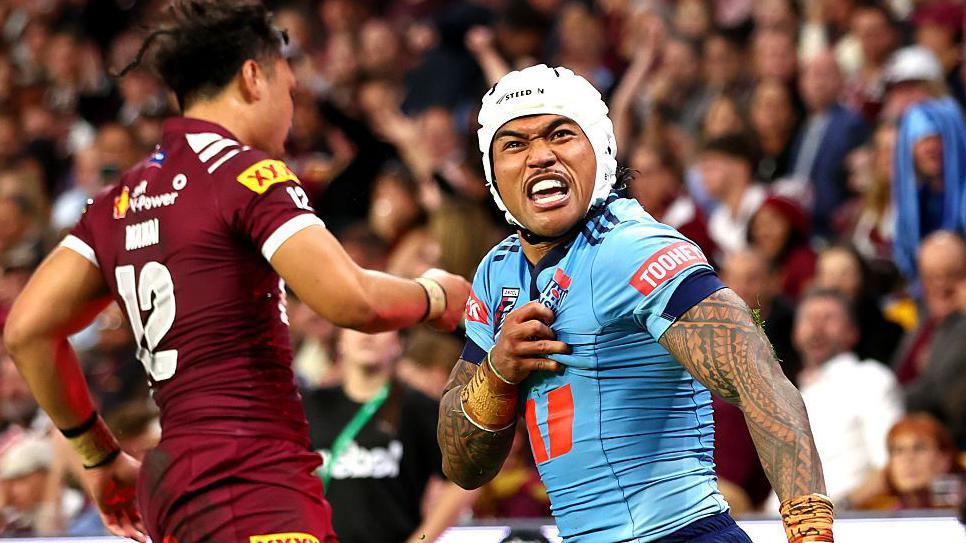
If there is one immediate winner from this announcement, it is the New South Wales Blues middle rotation. The eligibility changes have unlocked a player who arguably shifts the balance of power immediately: Addin Fonua-Blake (AFB).
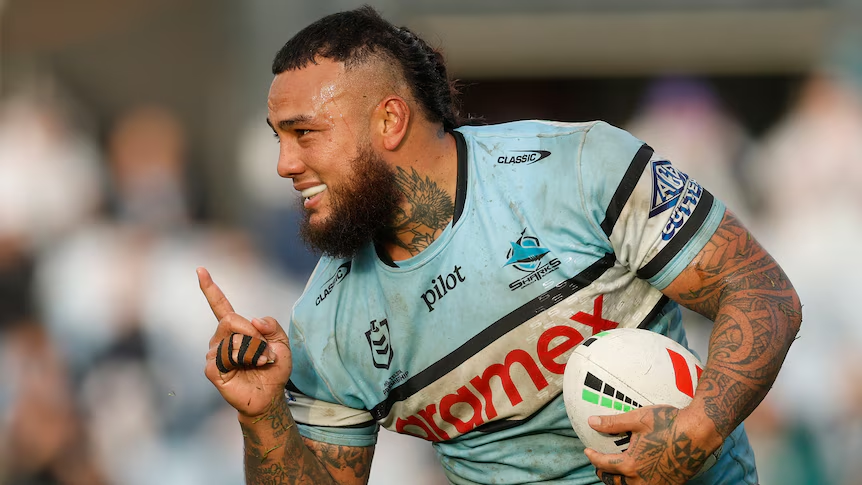
According to the analysis from the Levels Network, Fonua-Blake is a “lock” to walk straight into the team. Previously ineligible due to his representation of New Zealand (a Tier One nation) and Tonga, AFB’s inclusion creates a terrifying prospect for Queenslanders. Willie Mason, former Blues enforcer, didn’t mince words, calling AFB a “game changer” who will be a “problem for Queensland”.
The implications for the current NSW team structure are massive. Imagine a starting front-row rotation featuring Payne Haas and Addin Fonua-Blake. These are two props who play big minutes, often 75 minutes “on their ear” and deliver high-quality impact throughout.
This creates a domino effect on the rest of the pack. Players like Max King, who did an admirable job in previous series, likely slide down the pecking order or move to the extended bench. The new “Big Three” middle rotation for the Blues looks to be Payne Haas, Addin Fonua-Blake, and Mitch Barnett. This allows the Blues to maintain relentless pressure through the middle third of the field, fixing a rotation issue where the drop-off in intensity after Haas left the field was previously noticeable.
Furthermore, this opens the door for Victor Radley. While some pundits argue Radley may have missed his absolute prime window due to the old rules, his ability to play for England and now return to the Origin arena gives NSW a versatile lock/hooker option. While he faces stiff competition from Isaah Yeo and Cam Murray, having a player of Radley’s aggression available adds depth that simply didn’t exist a week ago.
Looking further ahead, the rule change secures the future of young outside backs like Casey McLean. Born in NSW, McLean is tipped to be a future superstar. Under the old rules, representing New Zealand could have disqualified him. Now, he is projected to be a staple in the NSW backline for “five to seven years,” potentially challenging for a spot sooner rather than later.
Queensland Maroons: Securing the Spine and the Edge
While NSW gains muscle in the middle, Queensland secures its flair and stabilizes its edges. The headline story here is Kayln Ponga.
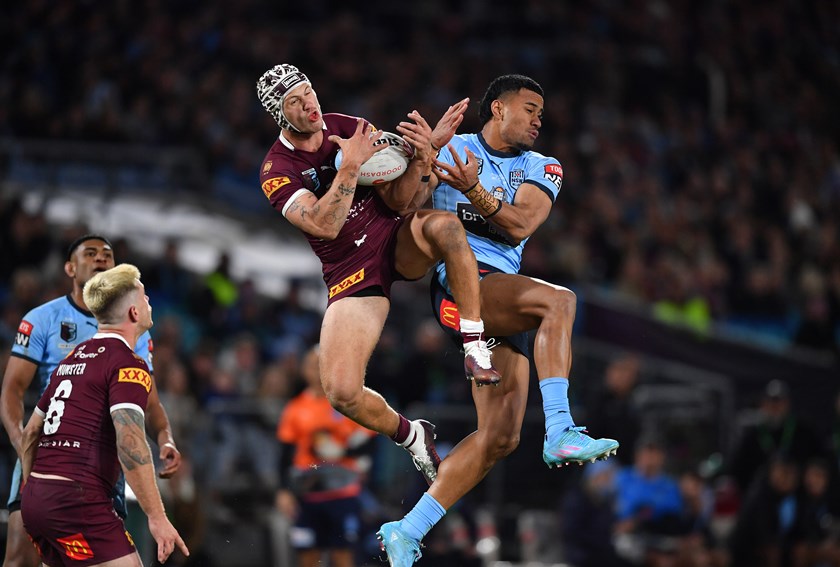
Ponga has long been the subject of eligibility tug-of-war speculation. He has previously had to make “tough decisions” regarding his desire to represent his Māori heritage versus his commitment to Queensland. The new rules remove this friction entirely. Ponga can now pledge allegiance to the Kiwis for the World Cup without sacrificing his Maroon jersey. This is a massive retention win for Queensland; there is no longer a risk of Ponga walking away from Origin to pursue a distinct international legacy.
However, the most tangible on-field addition for the current Queensland team is Cronulla Sharks back-rower Briton Nikora.
Nikora moved to Queensland when he was nine years old, well within the 13-year-old cutoff. He has been a consistent high-performer for the Sharks and the Kiwis. With the Maroons often having a “revolving door” on their edges, Nikora offers a solution that fits perfectly into the Billy Slater methodology. As noted in the Levels Network discussion, Nikora plays with the tenacity and “dog” that suits the Origin arena perfectly. He is a line-running specialist who creates genuine competition for spots alongside established stars like Jeremiah Nanai and Ruben Cotter.
This change also clears up the status of players like Jayden Campbell and potentially AJ Brimson, ensuring that Queensland’s depth chart remains stocked with players who might have otherwise drifted toward exclusive international representation.
The “Missed Cut”: Why the Rules Still Matter
It is crucial to understand that this is not a free-for-all. The “13th birthday” rule remains the strict gatekeeper, and this significantly impacts the “what if” scenarios for the current teams.
Despite the excitement, several superstars remain ineligible. Jason Taumalolo, arguably the greatest middle forward of his generation, arrived in Australia too late to qualify. The same applies to Storm superstar Jahrome Hughes (who moved to the Gold Coast around age 14) and English talents like Herby Farnworth and Sam Burgess.
This distinction is vital for the integrity of the contest. As argued by Justin Horo, the age of 13 represents the start of high school and the entry into the state’s junior development systems. It ensures that the players donning the sky blue or maroon have actually come through the pathways of those states, rather than being “parachuted” in as established professionals. The rule change is about heritage, not recruitment.
The International Ripple Effect
Finally, we must look at how this affects the international “current team,” specifically New Zealand. The Kiwis are arguably the biggest beneficiaries outside of the Origin states.
With Kayln Ponga now free to represent New Zealand without jeopardizing his Origin paycheck and prestige, the Kiwis’ spine becomes lethal. However, this creates a “good headache” for the selectors. They now potentially have Ponga, Keano Kini, Charnze Nicoll-Klokstad, and others fighting for the fullback position.
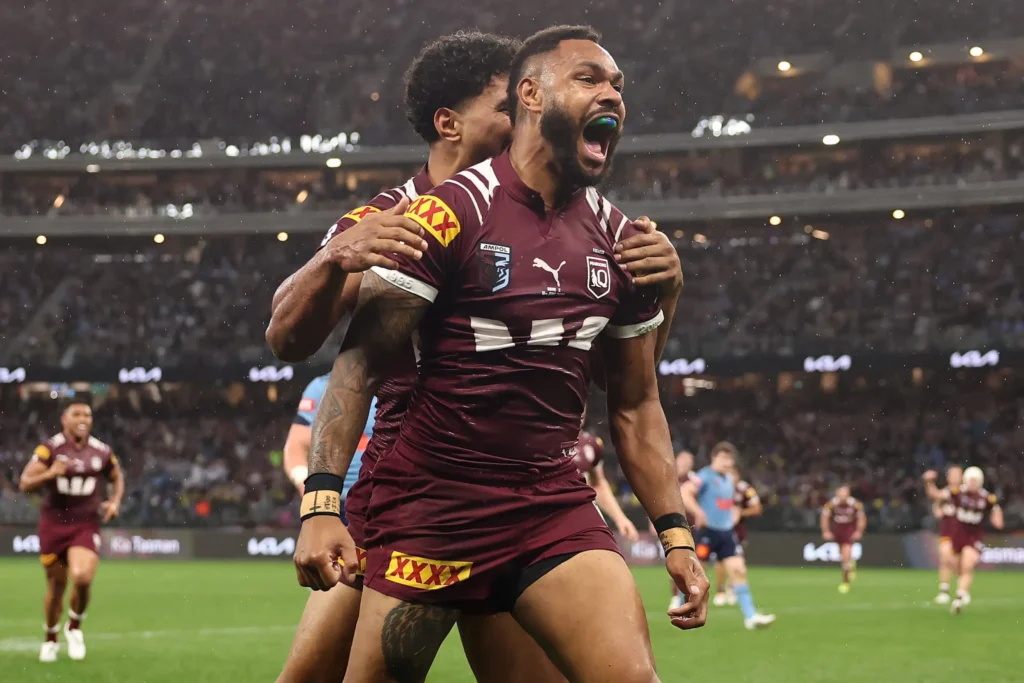
The Levels Network hosts predict that Ponga is a “big tick” for the next World Cup squad. Having players of Origin caliber like Ponga, Hughes (already a Kiwi staple), and potentially Nikora all available raises the standard of the international game. It allows players to bring that “Origin intensity” back to their national camps.
A Win for the Fans
Ultimately, these changes mean the “current team” you see run out for Game 1 of the 2026 State of Origin series will be stronger, faster, and more representative of the NRL’s true talent pool than ever before.
For NSW, it means a forward pack that offers no respite. For Queensland, it means securing the loyalty of their most dynamic playmakers and fortifying their defensive edges. And for the fans, it means the days of asterisks and eligibility flowcharts are largely over. If you grew up here, you play here. As Peter V’landys stated, “If you’re eligible, you should be able to play for your State”.
Get ready. The 2026 series is going to be a different beast.