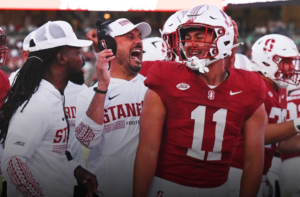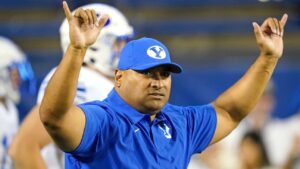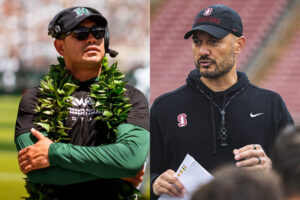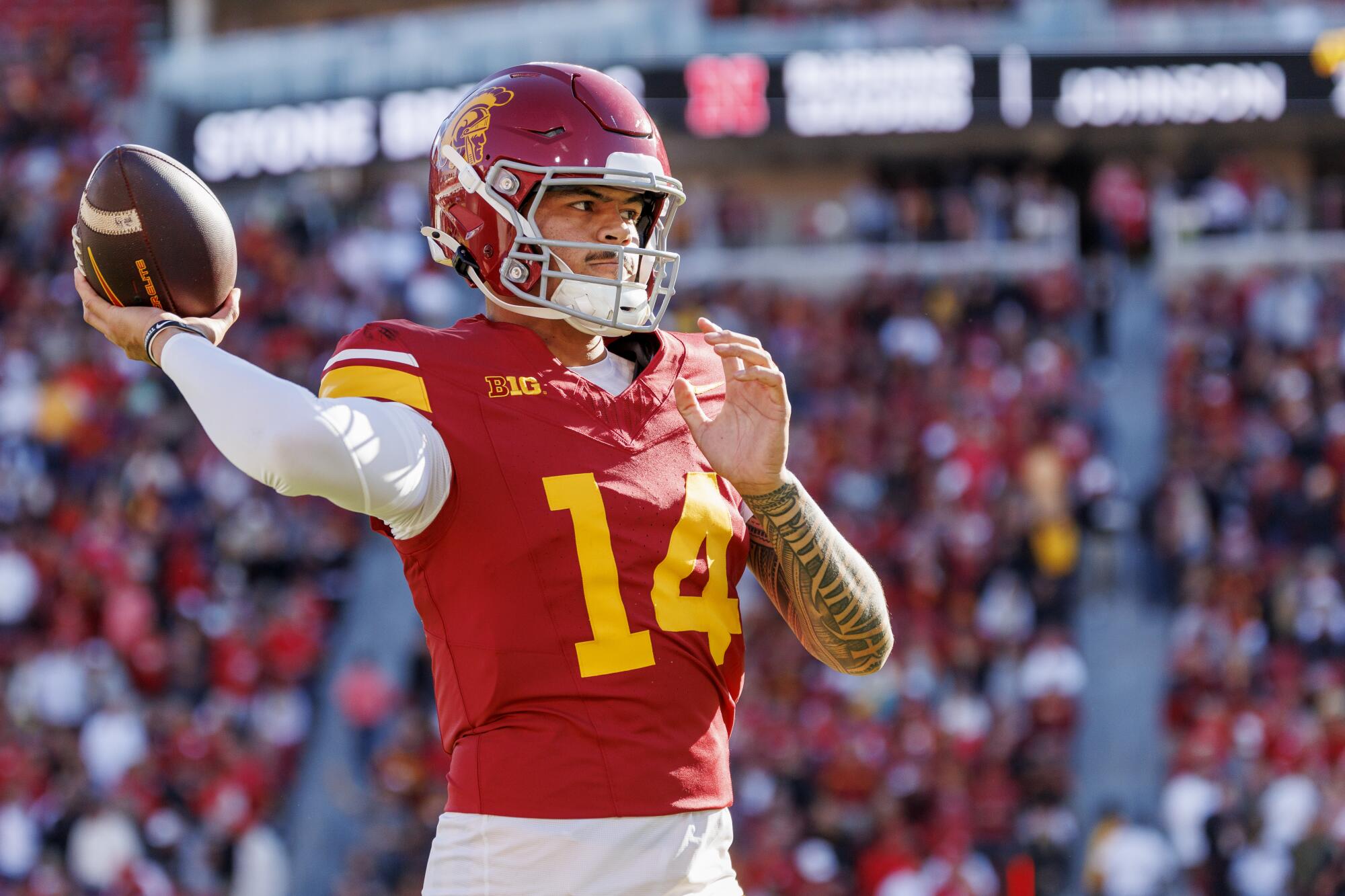

There are football games that are remembered for the score, and then there are games that feel bigger than the final number on the scoreboard.
For Tavita Pritchard, Stanford’s 37-27 season-opening victory over Hawai’i on Saturday night was both.
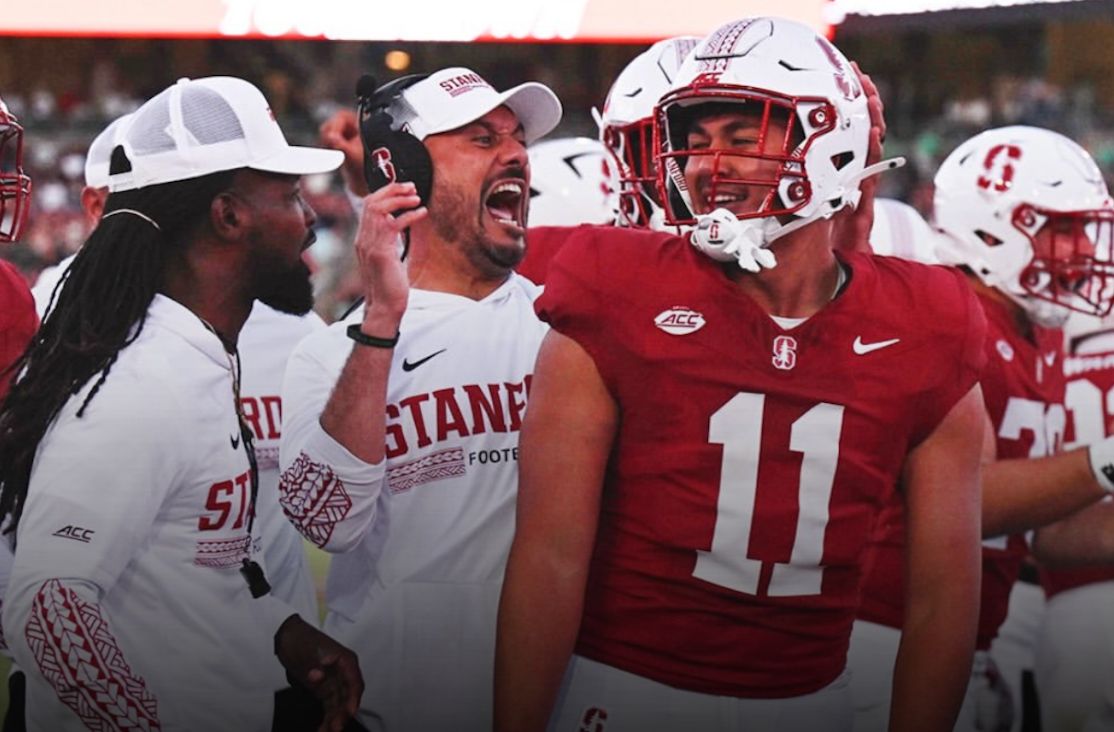
Pritchard’s first game as Stanford’s head coach came nearly two decades after he first took the field for the Cardinal as a quarterback. Now, years after playing, graduating and building his coaching career on The Farm, Pritchard stood on the Stanford sideline as the program’s head coach and opened a new chapter with a win.
And fittingly, it happened on a night dedicated to celebrating the Pacific Islander community.
Stanford’s home opener at Stanford Stadium was held as a Pacific Islander Heritage Celebration, featuring live performances, special recognitions and other celebrations honoring the university’s Pacific Islander community. The event also included a fan fest and cultural performances surrounding the game.
For Pritchard, the significance of the night went far beyond football.
After the game, he spoke openly about what his Samoan heritage and family mean to him, reflecting on the sacrifices of the generations who came before him.
“I’m so proud of my Pacific Islander roots. My family from Samoa, I think about my grandparents who immigrated here from American Samoa, you know, for a better life for their family, my dad, his siblings, and just what that community means to me.”
He continued by acknowledging the people and community who helped shape the person and coach he is today.
“They’re one that’s lifted me up and allowed me to do what I’ve done today, you know, and supported me in every imaginable way.”
That made the night feel particularly full circle.
Pritchard is not simply returning to Stanford as a coach. He is returning to a place where he once wore the Cardinal uniform as a quarterback from 2006 through 2009. He appeared in 31 games and made 20 starts, becoming part of Stanford football history when he led the Cardinal to a stunning 24-23 upset of No. 2 USC in 2007. Now, nearly two decades later, he has returned to lead the program himself. And his first game in that role delivered a finish that seemed almost perfectly suited for the occasion. Stanford entered the fourth quarter with a 23-7 advantage, only for Hawai’i to storm back with 20 unanswered points and take a 27-23 lead with just over four minutes remaining.
The Cardinal answered.
Quarterback Davis Warren guided a seven-play, 62-yard drive that ended with Micah Ford’s third rushing touchdown of the afternoon, a two-yard score that put Stanford back in front, 30-27, with 1:41 remaining. Warren finished his Stanford debut with 310 passing yards and a touchdown while Ford rushed for 99 yards and three touchdowns. Then came the moment that sealed it. With Hawai’i attempting to mount one final comeback, Stanford outside linebacker Tevarua Tafiti recovered a fumble by Hawai’i quarterback Micah Alejado and raced 31 yards for a touchdown with 1:12 left, officially putting the game away at 37-27.
For Tafiti, the moment carried its own cultural significance.
The fifth-year linebacker from Waipahu, Hawai’i, was playing against a team from home on a night celebrating Pacific Islander heritage. After the game, he spoke about what the celebration meant to him and the broader community.
“Being Samoan and Hawaiian, from Hawai’i, that was a great celebration for the people in the community in this area. There’s a lot of Polynesian people in the community, so it felt great for us. I just loved it.”
Tafiti’s Stanford bio lists him as a Waipahu native and Punahou School graduate, and he has been a key part of the Cardinal defense throughout his career. He previously recorded a fumble-recovery touchdown against Wake Forest in 2024, making Saturday’s score his second career touchdown on a fumble recovery.
The connection between the players, the coach and the community made the night particularly meaningful.
Pritchard acknowledged that Stanford’s celebration was an opportunity to honor a Pacific Islander community that stretches well beyond one island or one culture.
“For us as a university and as an athletic program and a football program, to be able to try to honor them and this community, especially in the Bay Area, we have a huge Pacific Islander community of Samoans and Tongans and Hawaiians and Melanesians, Micronesians, like, it runs the gamut, and to be able to honor them as best we could through that, it means a lot.”
Yet Pritchard also made clear that once the ball was kicked off, the focus had to return to the players.
“In terms of the game, you know, you try to separate those things a little bit because when it comes back to the football, it’s about our players, and it’s about giving them every opportunity to go out there and excel.”
And when the final whistle came, his pride was unmistakable.
“Couldn’t be more proud of the way that they showed up tonight and finished.”
That word, finished, felt especially fitting. Stanford nearly watched a 16-point lead disappear. Instead, the Cardinal found a way to respond twice in the final 1:41, turning what could have been a historic Hawai’i comeback into a 37-27 Stanford victory. But beyond the comeback and the box score, Saturday night represented something much larger. A former Stanford quarterback who once helped create unforgettable moments on The Farm is now creating them from the sideline as the head coach. A coach proudly speaking about the grandparents who immigrated from American Samoa and the community that helped lift his family. A Hawaiian and Samoan linebacker from Waipahu scoring the touchdown that sealed a Stanford victory over Hawai’i. And an entire stadium taking time to celebrate the Pacific Islander communities that have helped shape the Bay Area and the Stanford family. For Pritchard, it was the beginning of a new era. For the community he spoke so proudly about, it was a night of recognition. And for Stanford football, it was a pretty special way to begin.