
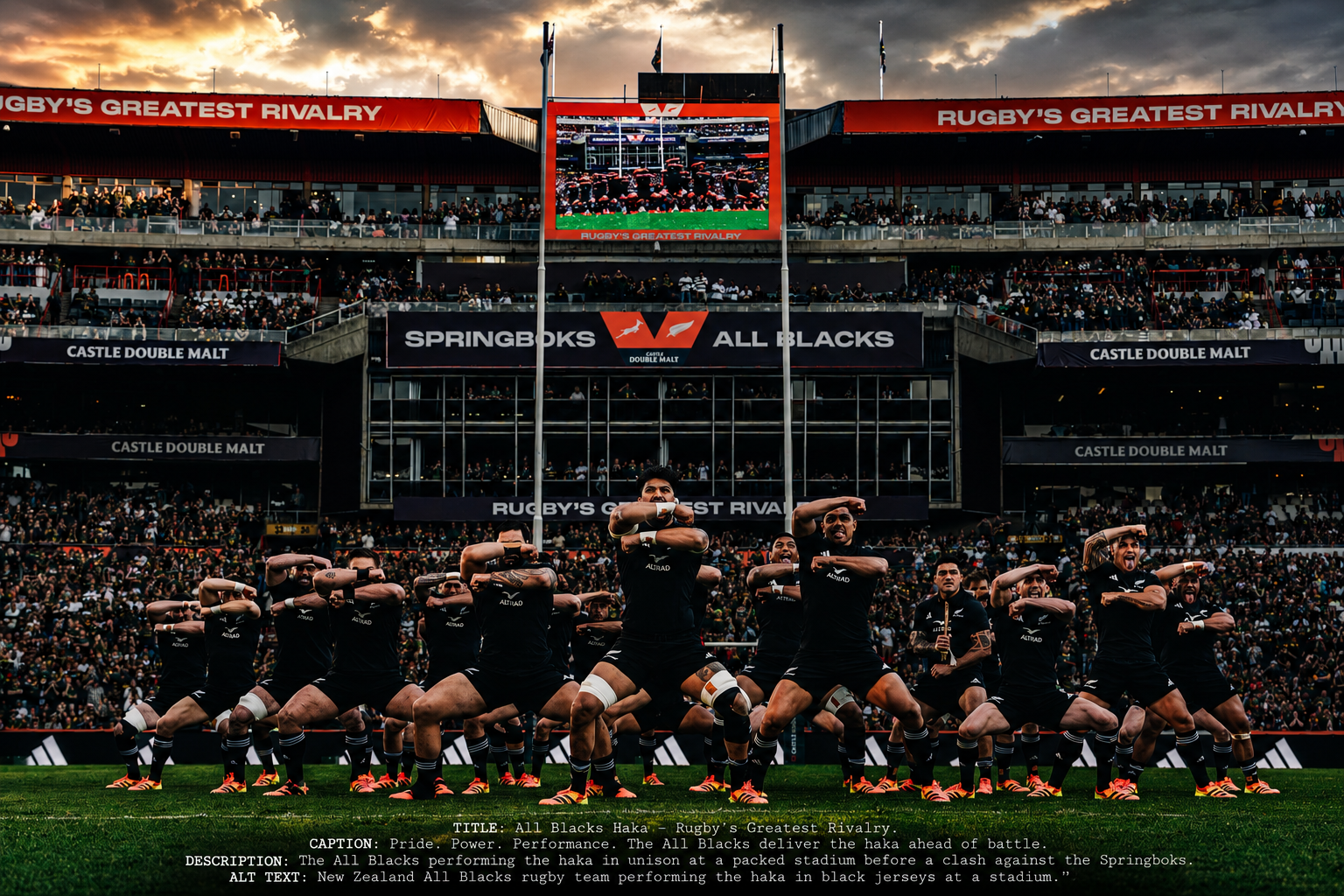
JOHANNESBURG — Rugby’s Greatest Rivalry doesn’t care about your stats.
If you looked solely at Saturday’s sheet at a packed Ellis Park, you would assume the Springboks walked away victorious . South Africa controlled an overwhelming 61% of territory, physically dominated the gain line, and subjected New Zealand to a first-half set-piece nightmare . Yet, when the final whistle blew, the scoreboard told a completely different story: All Blacks 33, Springboks 16 .
The central theme of this modern classic was clear: the All Blacks did not win every battle, but they won the ones that mattered. South Africa created pressure; New Zealand turned pressure into points.
The Highveld Storm: Early Bok Scrum Dominance
From the opening whistle, Ox Nche, Malcolm Marx, and Wilco Louw subjected the All Blacks’ starting front row to a brutal set-piece demolition . For 54 minutes, the visitors’ scrum was a dangerous liability, operating at an atrocious 57% success rate .
Compounding this, prop Ethan de Groot suffered a knee injury and departed alongside Josh Lord after a nasty head clash. Backed by locomotive No. 8 Jasper Wiese and Pieter-Steph du Toit’s physicality, South Africa controlled territory . Yet, this dominance didn’t translate into a commanding lead.
The Turning Point: The Sub-Bench Resurrection
Recognizing the crisis, Dave Rennie made crucial changes . George Bower had replaced De Groot, and after the break, hooker Asafo Aumua and prop Fletcher Newell were unleashed .
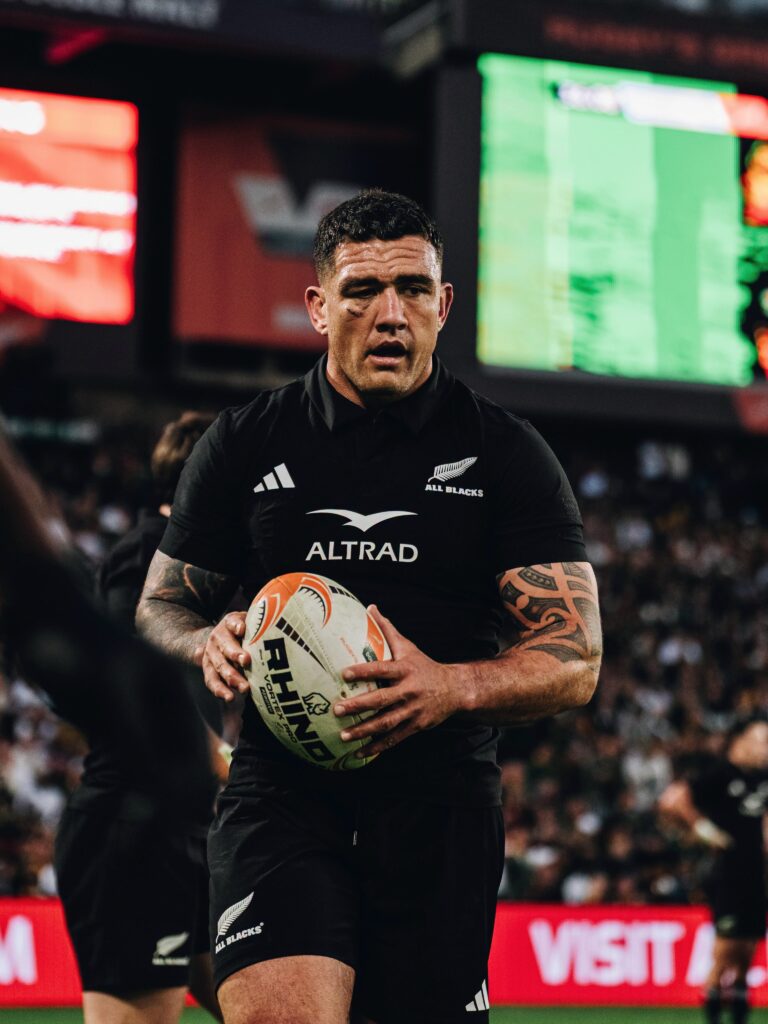
The game’s defining moment arrived in the 56th minute . Defending a fragile 19-16 lead, New Zealand found themselves packed into a scrum just five meters from their own posts . Instead of folding under the immense South African pressure, the newly minted All Blacks front row produced an astonishing shove, earning a massive turnover penalty .
“I think we probably owe them a beer,” halfback Cam Roigard said of the bench’s heroic stand . “Unbelievable—we got a lot of energy from that.” Rennie agreed: “The scrum came good—it was a big part of our success tonight.”
Defensive Pride: The Unbreakable Black Wall
New Zealand’s victory was anchored in defensive pride . The All Blacks refused to break, executing 132 tackles to South Africa’s 86 .
In the 36th minute, as the Boks drove a lineout, Jordie Barrett stripped hooker Malcolm Marx as he dove to score . While South Africa registered nine entries into New Zealand’s 22, they came away empty-handed, averaging a miserable 1.1 points per entry . Meanwhile, the clinical All Blacks entered the South African 22 just six times, averaging a lethal 4.3 points .
Five Tries to One: Ruthless Clinical Edge
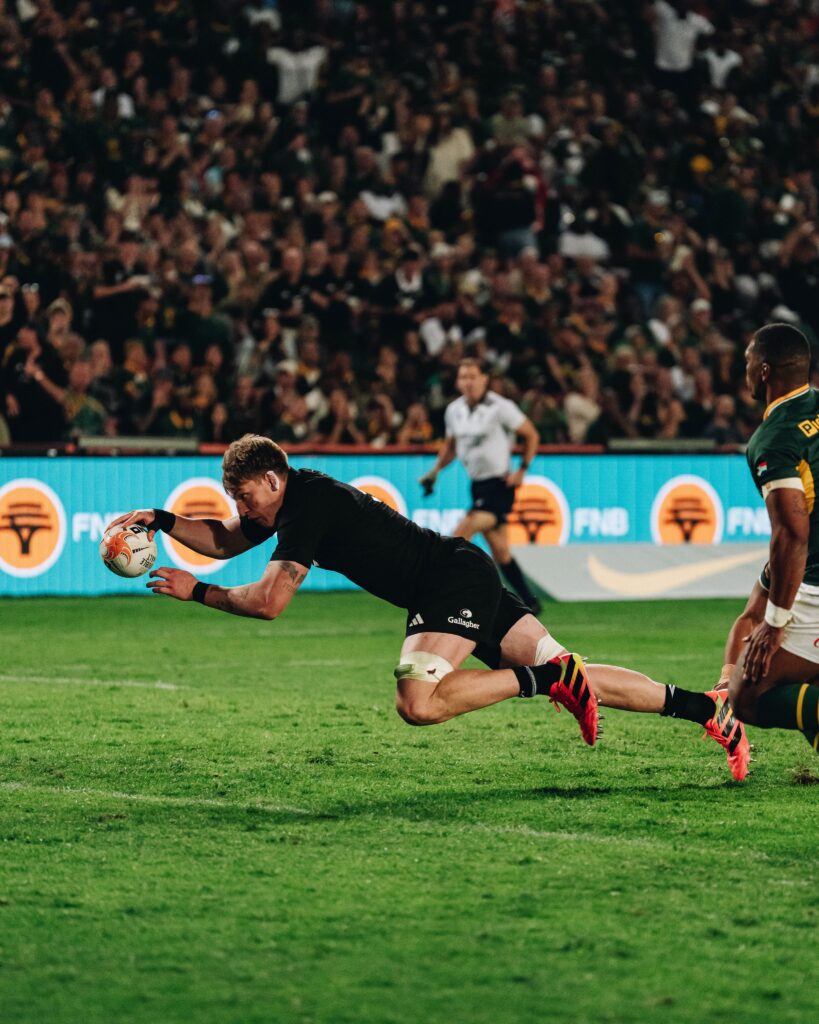
When New Zealand got chances, they were lethal, outscoring the hosts five tries to one .
Will Jordan scored a brace—including his 53rd try in 58 Tests—bookending scores from debutant Josh Moorby, lock Fabian Holland, and Luke Jacobson . Moorby latched onto a Tupou Vaa’i offload . Holland charged down Grant Williams’ clearance, sidestepped Sacha Feinberg-Mngomezulu, and scored . Jacobson scored off the base of a dominant five-meter scrum .
In contrast, South Africa’s decision-making faltered . Feinberg-Mngomezulu kicked a 22m mark cross-field directly into touch instead of retaining possession . The frustrations culminated in a late disciplinary meltdown, as Marco van Staden and Cobus Reinach were sin-binned in the final ten minutes, leaving the hosts broken with just 13 players on the pitch .
Looking Ahead to Cape Town
The series now moves to Cape Town Stadium—a venue where South Africa has lost only once since 2021. While New Zealand’s clinical counter-attacking saved them in Johannesburg, they must find more gain-line consistency. To match the physical threat of the Springboks at sea level, the All Blacks may look to inject a powerful, bruising carrier like Timoci Tavatavanawai if selected, ensuring they don’t have to live on scraps next Saturday.